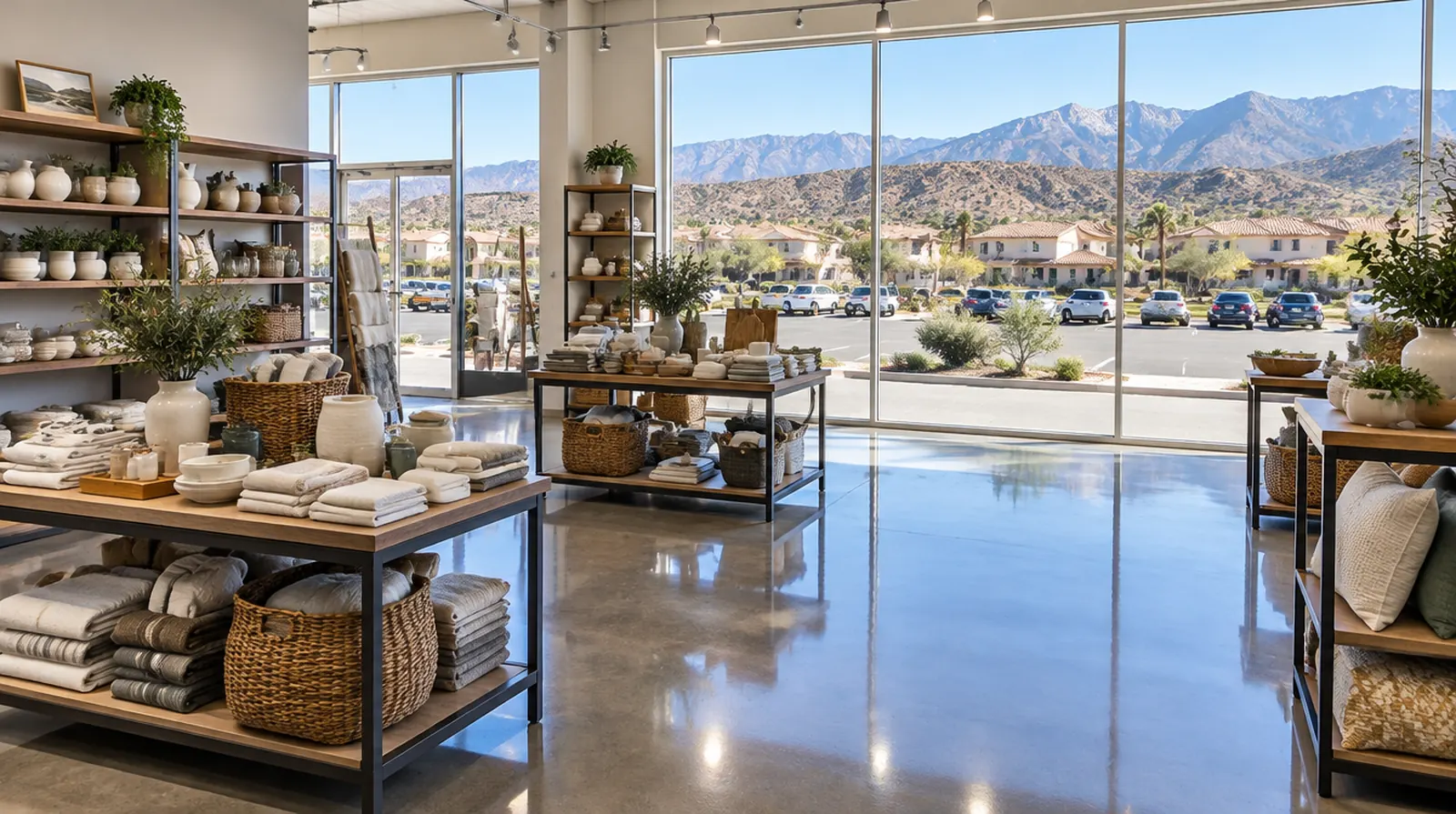
What polished concrete is
Polished concrete is not a coating. We use heavy grinders with diamond tooling to cut and refine the surface of the slab, step by step, from coarse to very fine. Along the way we apply a densifier, a liquid that soaks in and hardens the concrete. The result is a hard, smooth floor with a natural shine that comes from the concrete itself.
Because there is no coating to peel or wear through, polished concrete can last a very long time with basic care. It is a popular choice for retail, offices, showrooms and warehouses.
Levels of shine
- Satin has a soft sheen and works well in warehouses and industrial spaces.
- Semi-gloss reflects light and looks great in offices and shops.
- High gloss gives a mirror-like look for showrooms and lobbies.
We can also choose how much of the stone in the concrete shows. A light grind keeps the "cream" finish, while a deeper grind shows more of the sand or stone.
Our process
- Inspect the slab and test areas.
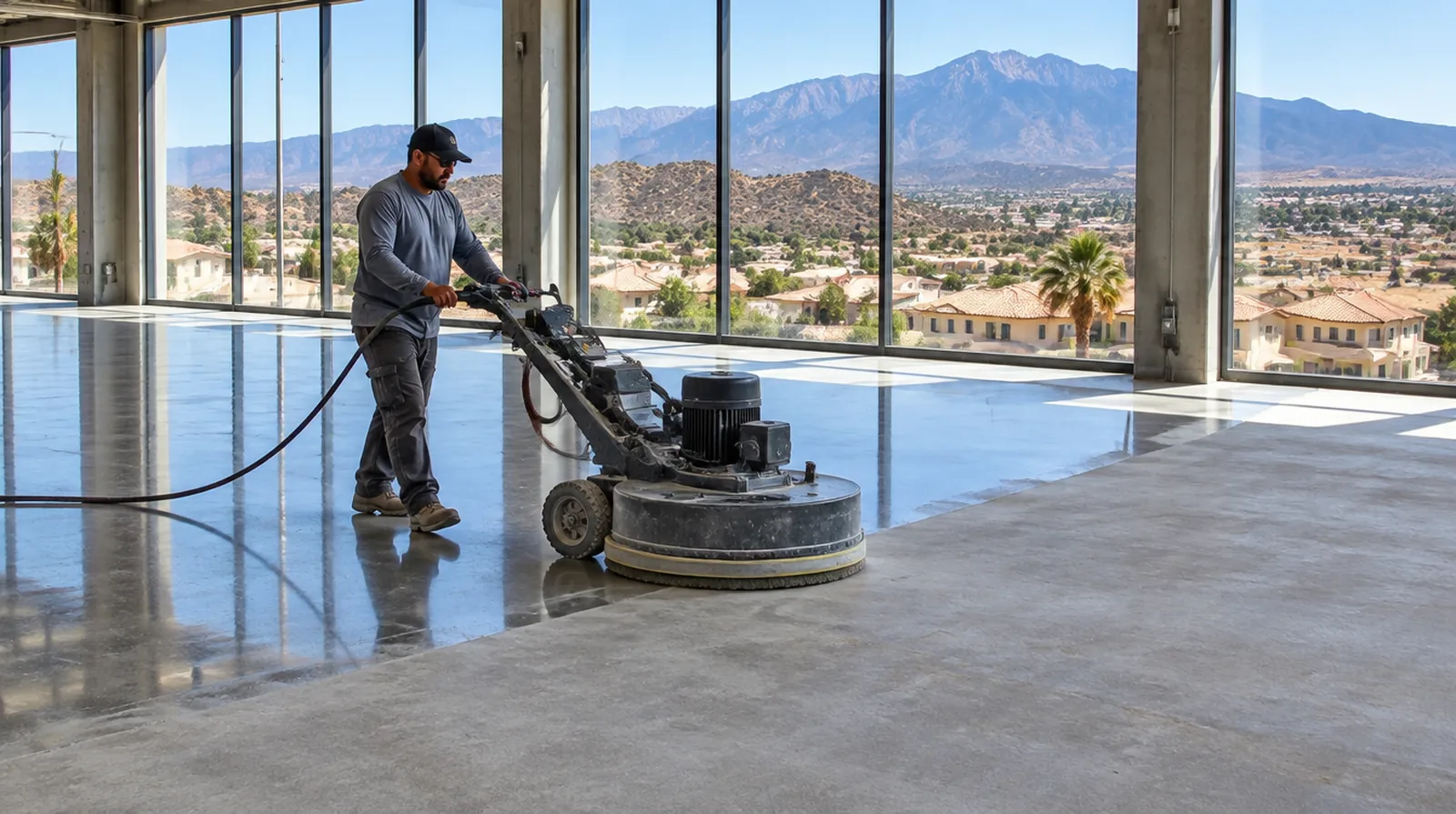
- Grind with coarse diamonds to remove coatings and flatten the floor.
- Fill cracks and holes.
- Densify to harden the surface.
- Polish with finer diamonds until we reach the shine you want.
- Apply a guard to help resist stains.
Good spaces for polished concrete
- Retail stores and showrooms
- Offices and lobbies
- Warehouses and distribution floors
- Restaurants and coffee shops
- Homes with slab foundations
New buildings
With so many new commercial buildings going up in Beaumont, we often polish slabs before tenants move in. New concrete polishes very well, and doing it before walls, racks and fixtures go in makes the work faster and less costly. If you are building out a space, talk to us early.
Polished concrete in homes
More homeowners are choosing polished concrete when they pull up worn carpet or tile. It stays cool in the summer heat, it is easy to clean, and it does not trap allergens. Area rugs add warmth and soften sound. Pets do well on it too. Keep in mind that the slab's history shows through: cracks, patches and old tack strip holes are part of the look. We do a small test so you can see what to expect.
Polished or coated?
Polished concrete is best when the slab is in good shape and you like a natural stone look. If the slab is very damaged, or you need strong chemical resistance, a coating such as commercial epoxy may be better. For a bold, decorative look, consider metallic epoxy.
Care
Dust mop daily in busy spaces. Wash with a neutral cleaner. Avoid acidic cleaners, which can etch the surface. In shops and warehouses, an auto scrubber with the right pads keeps the shine up. Over time we can come back to burnish or re-polish high-traffic paths.
Questions
Is polished concrete slippery?
Dry polished concrete has good traction. Like any smooth floor, it can be slick when wet, so mats at entries help.
How long does it take?
Most projects take a few days, depending on size and the level of shine.
Will stains come out?
Some old stains will lighten during grinding. Deep stains may stay as part of the character.
Warehouses and big floors
For large warehouse and distribution floors, polished concrete is one of the lowest-cost floors over its life. It does not need recoating, it handles forklift traffic well, and it reflects light, which can reduce how much lighting the space needs. A satin finish is usually the best choice for these spaces.
Getting a quote
Polishing cost depends on the floor's size, its condition, any coatings that must come off and the level of shine. We test a small area first so you know how the slab will look.
For tenant build-outs, we can work directly with your general contractor so polishing fits the construction schedule, usually after drywall and before fixtures and racks go in.
Talk about polished concrete
Call (951) 502-3925 for a free estimate.