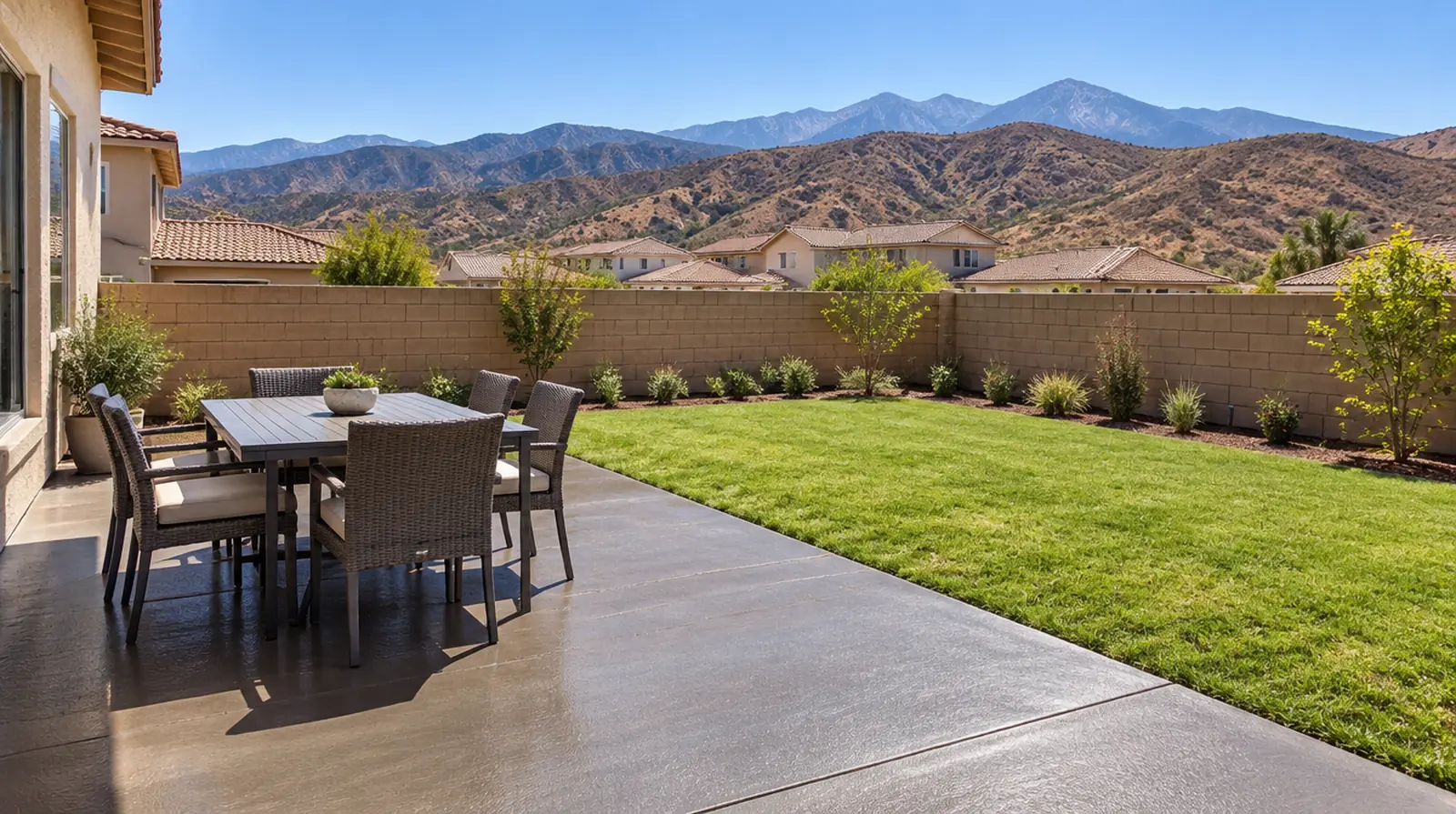
Why seal concrete?
Concrete is porous. It soaks up water, oil, grease, rust and anything else that spills on it. In Beaumont, bare concrete also takes a beating from strong sun, wind-blown grit and the big temperature swings between day and night. A good sealer reduces how much the slab absorbs, makes stains easier to clean and helps keep the surface from wearing and dusting.
Types of sealers
- Penetrating sealers soak into the concrete and protect it from within. They do not change the look much and leave a natural, non-slick surface. These are our choice for most outdoor concrete.
- Acrylic sealers sit on the surface and add a light sheen or "wet look." They are good for decorative and stamped concrete but need to be redone every few years.
- Densifiers harden the surface of interior slabs and cut down on dust.
What we seal
- Patios and back porches
- Walkways and front entries
- Pool decks
- Driveways
- Garage floors that do not need a full coating
- Stamped and colored concrete
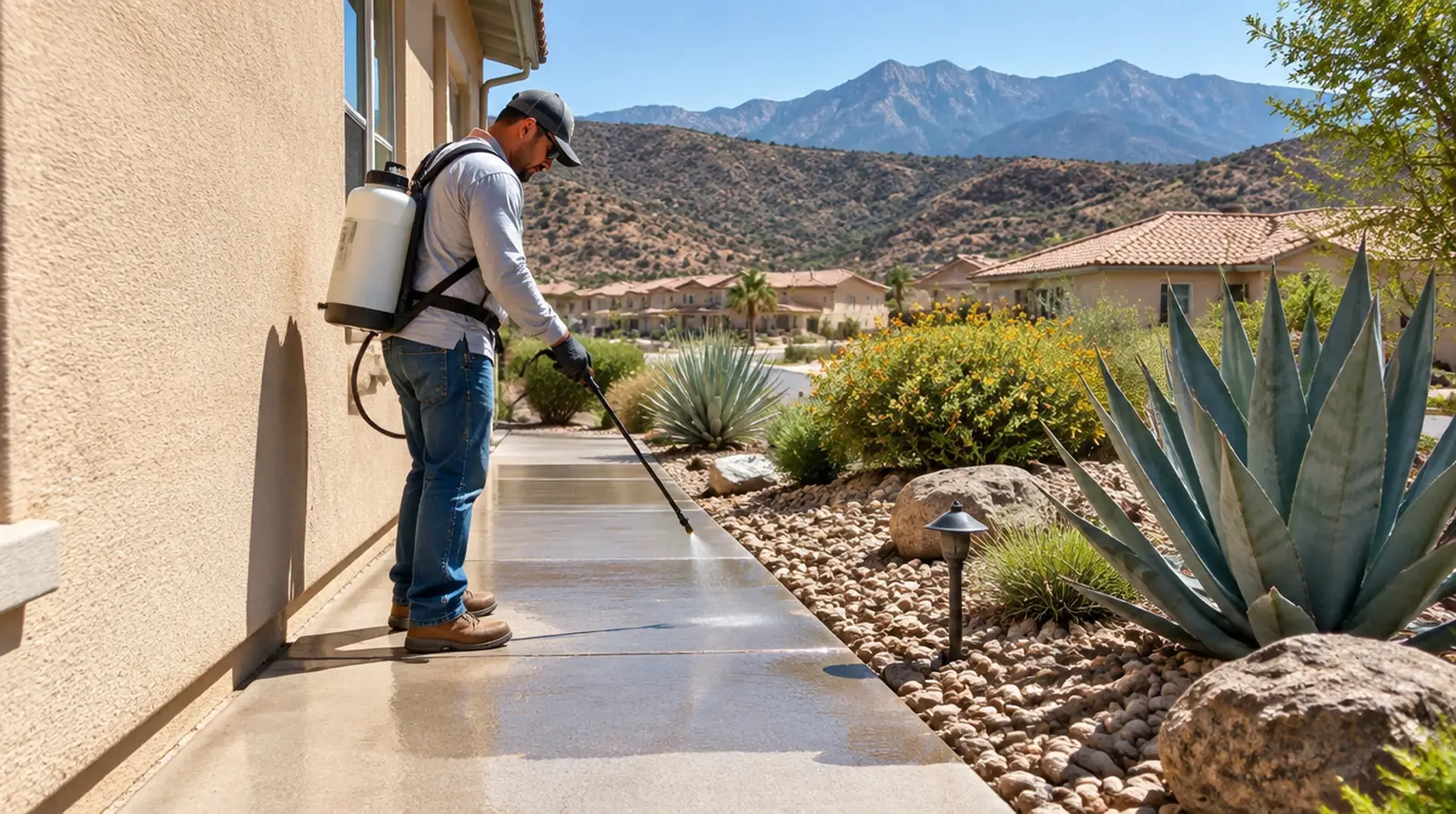
Our process
- Clean. We pressure wash and treat oil and rust stains.
- Repair. We fill small cracks and chips.
- Dry. The concrete needs to be dry before sealing.
- Apply. We spray or roll the sealer evenly and back-roll to work it in.
- Cure. Most sealers allow foot traffic within a few hours.
Stamped and decorative concrete
Many homes here have stamped or colored concrete patios and walkways. Over time the color fades in the sun and the old sealer turns cloudy or peels. We clean off the failing sealer, refresh the color where needed and apply a new UV-resistant sealer. It can make a tired patio look almost new.
Pool decks
Pool decks take chlorine, sunscreen, constant water and full sun. We use sealers that hold up to pool chemicals and add grip so the deck is safe to walk on with wet feet. We can also seal around the pool coping.
How often to reseal
Penetrating sealers can last several years. Topical acrylic sealers usually need a refresh every two to three years outdoors, sooner if the area gets heavy sun. We can tell you when it is time by doing a simple water test: if water soaks in instead of beading, it is time to reseal.
Sealer or coating?
If you want a finished, colorful look and the most protection, a coating is better. For garages, see garage floor epoxy. For outdoor slabs, see driveway coating or polyaspartic coatings. If you like the look of your concrete as it is, sealing is the simple and affordable choice.
Questions
Will sealer make my patio slippery?
Penetrating sealers do not. For glossy sealers, we can add grit.
Can you remove old stains?
We clean and treat stains before sealing. Some deep stains will lighten but not fully disappear.
Garage sealing on a budget
If a full coating is not in the budget yet, a penetrating sealer or densifier is a good first step for a garage floor. It cuts down on concrete dust, makes oil drips easier to clean and protects the slab until you are ready for a coating. When you do upgrade, we grind the sealer off as part of the prep, so nothing is wasted. For rentals and storage spaces, sealing alone is often all a floor needs.
Sealing is also a smart step after a new slab is poured, such as a patio extension, an RV pad or a new walkway. Fresh concrete is at its most porous, and sealing it early, once it has cured, keeps the first stains from setting in.
What sealing costs
Sealing is one of the most affordable ways to protect concrete. Price depends on the square footage, how much cleaning and stain treatment the slab needs and the type of sealer. We give you a written quote after a quick look.
Ask about pairing sealing with other work. If we are already coating your garage, sealing the patio or walkway the same week saves a second trip.
Get a sealing quote
Call (951) 502-3925 for a free estimate.