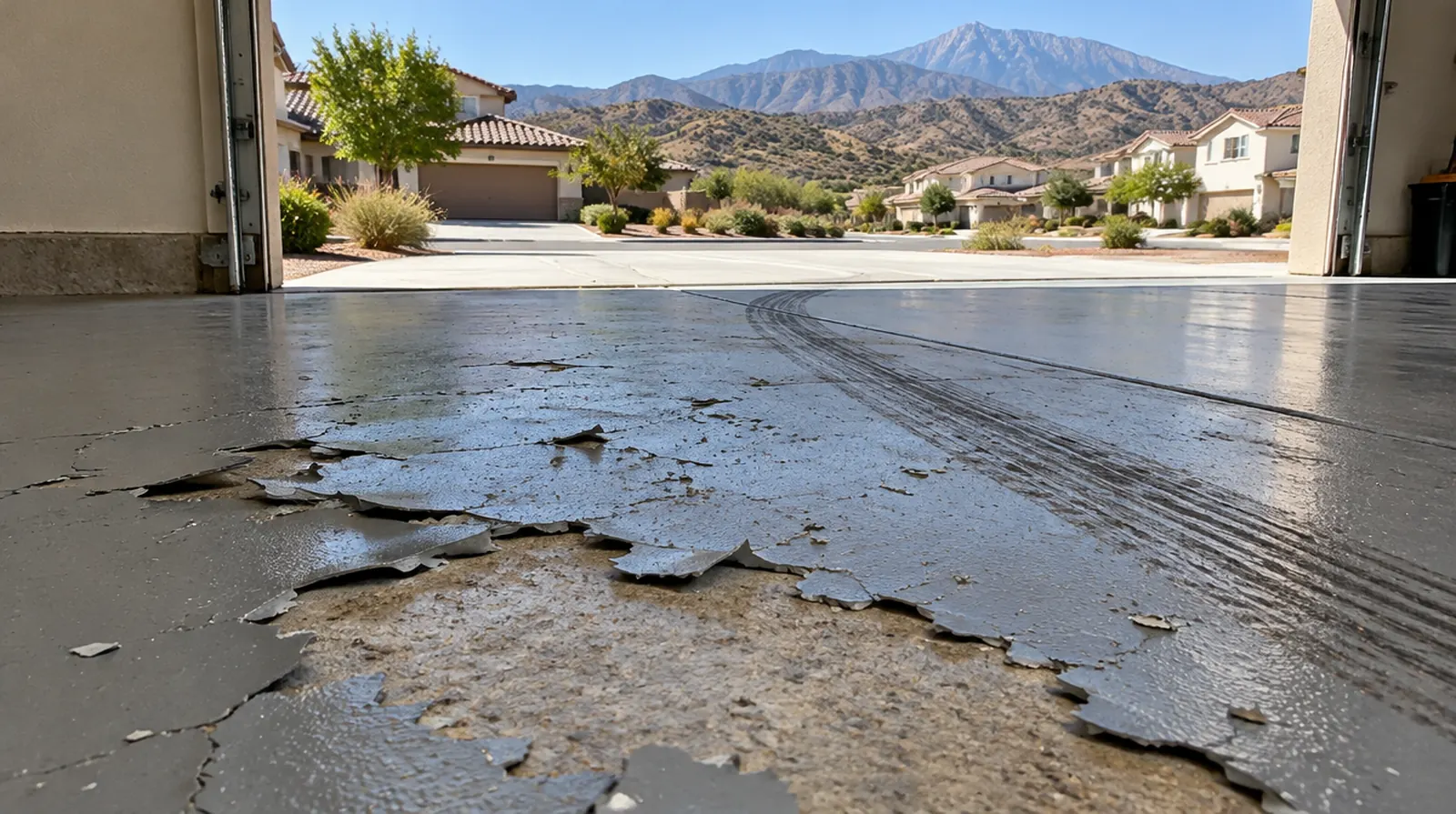
Why coatings fail
Most coatings fail for a few common reasons, and we see all of them in Beaumont:
- No grinding. The coating was rolled on smooth concrete and never bonded.
- Hot tire pickup. Soft, thin coatings lift when hot tires sit on them.
- Moisture. Water vapor from the ground pushes up under the coating and causes bubbles.
- Sun damage. Epoxy without a UV-stable topcoat yellows and gets brittle in direct sun.
- Impact. Dropped tools or heavy equipment chip the coating.
- Grit wear. Wind-blown sand ground in by tires wears through thin coatings near the door.
Repair or replace?
We start by checking how well the coating is still bonded. We tap and scrape across the floor to find loose areas. If only a few spots are failing and the rest is solid, a repair makes sense. If the coating lifts easily in many places, patching will only lead to more failures, and the best fix is to grind it all off and install a new system.
How we repair a floor
- Cut back loose coating to a solid edge.
- Grind the bare area and feather the edges.
- Fill chips, gouges and cracks.
- Recoat the area with a matching base and flake, if needed.
- Lightly sand the whole floor and apply a fresh topcoat so the repair blends in.
Matching an existing color exactly is not always possible, especially on older floors that have faded. A full topcoat helps blend things together. We will tell you up front how close the match will be.
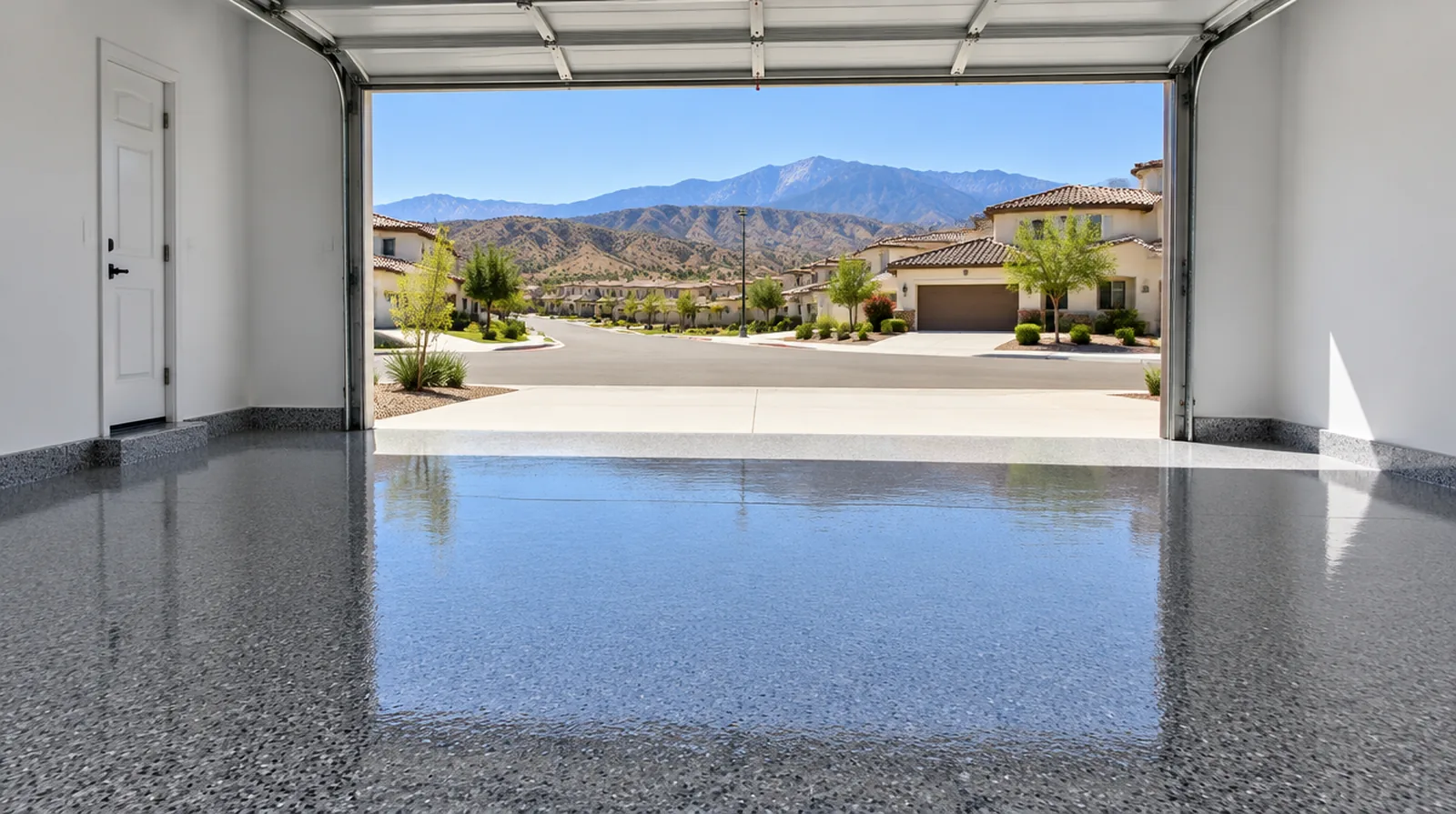
Starting fresh
When a floor has failed widely, we grind off the entire old coating, repair the concrete and install a new system. This is the most reliable fix, and it lets you choose a new color or finish. We often recommend a flake system with a polyaspartic topcoat for garages with sun exposure, or a full polyaspartic system if you want the job done in a day.
Concrete repair before coating
Some floors have deeper problems: spalled concrete, large cracks, sunken areas near the door or damaged joints. We repair those before any coating goes down. In some cases we may recommend a concrete contractor for major slab damage, and we will be clear about what we can and cannot fix.
Business floors
Commercial floors wear in patterns: forklift lanes, loading docks and the area in front of workstations. We can repair those zones after hours so you can stay open. We can also apply a thicker system in high-wear areas so they last longer. Chipped expansion joints can be filled with a semi-rigid filler that protects the edges.
Questions
Can you fix a DIY kit floor?
Usually we remove it. Most kits are too thin to repair well.
How long does a repair take?
Small repairs take a day. A full replacement takes one to three days.
Will my floor fail again?
When we fix the cause, such as poor bonding or moisture, the new floor is built to last.
Send a few photos of your floor and we can give you an idea of what it needs before we visit. See our garage floor epoxy page for the systems we install.
Spotting trouble early
A coating usually shows warning signs before it fails in big sheets. Watch for small chips at the edge of the slab near the door, cloudy or white patches under the surface, bubbles or blisters, and areas that sound hollow when you tap them. If you catch those early, a repair is often simple and affordable. Waiting usually means the damage spreads as water and grit get under the edges.
What repairs cost
Small spot repairs are often a modest one-day job. Full strip-and-recoat projects cost about the same as a new floor, plus removal. We look at the floor first and give you both options in writing when both make sense.
Get a repair assessment
Call (951) 502-3925 for a free estimate.