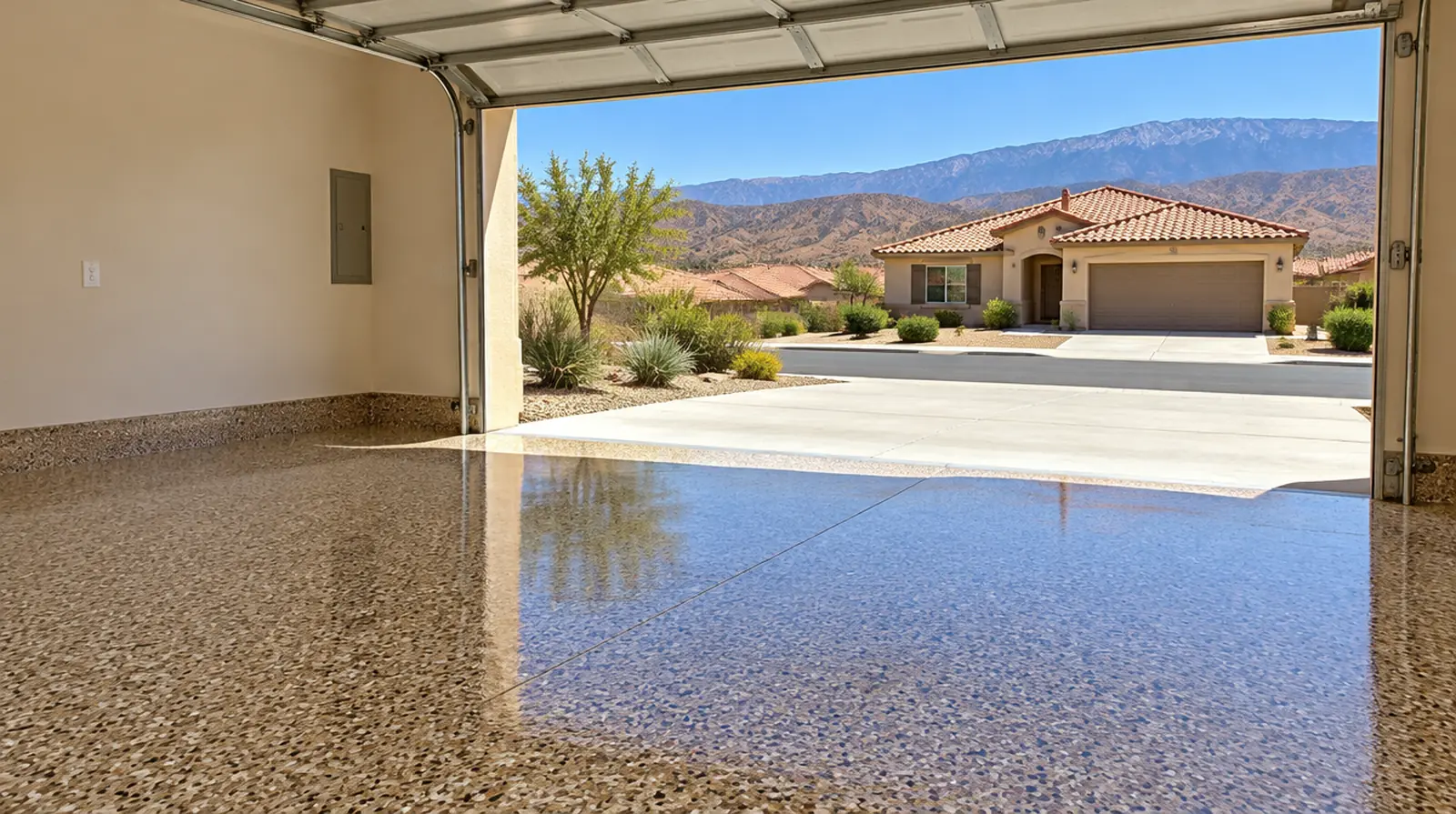
The floor that hides the grit
Grit is part of life in the pass. Even with the garage door closed, fine sand finds its way in. On bare concrete or a solid-color coating, that dust shows up right away. On a flake floor it blends into the pattern. Tire marks, footprints and a missed spot with the broom are much less noticeable. That is the main reason flake is our most popular finish in town.
Flake floors also give you more traction than a smooth coating. The chips create a subtle texture under the clear topcoat, so the floor is less slick when it gets wet from a car coming in out of the rain or a wet dog shaking off.
How we install a flake floor
- Grind the slab with diamond tooling and vacuum the dust.
- Repair cracks, pits and chipped joints.
- Roll a thick pigmented base coat. The base color is chosen to match your chip blend.
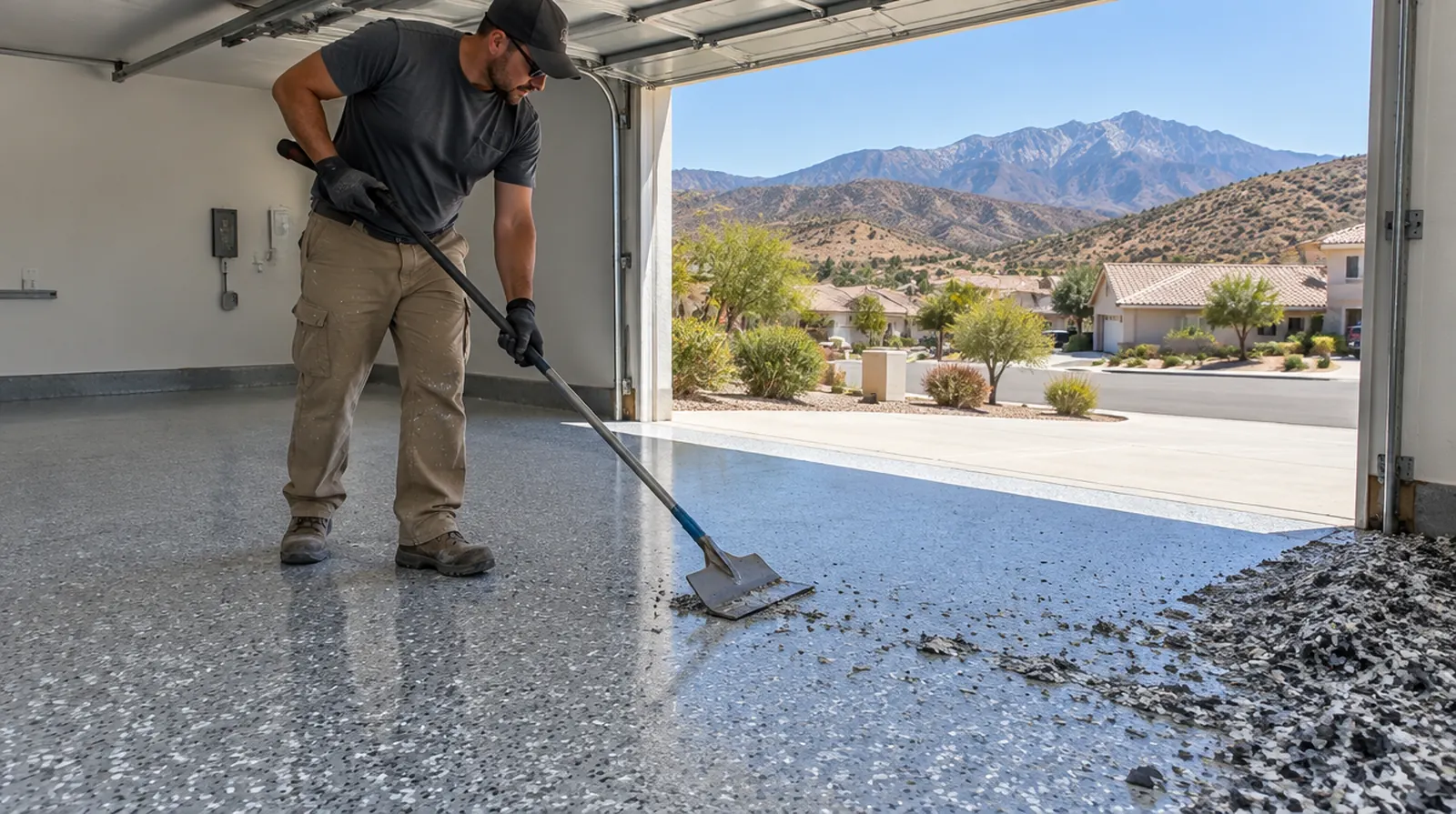
- Broadcast chips to refusal. We throw flake until no wet resin is left showing.
- Scrape and vacuum the loose chips after the base cures.
- Apply a clear topcoat. This locks in the chips and gives the floor its finish and grip.
A full broadcast is thicker and much tougher than a coating with a few chips sprinkled on top. It also has a more even, finished look.
Picking a chip blend
Chip blends come in dozens of colors. Here are a few that work well in Beaumont homes:
- Earth tones like tan, brown and cream match the stucco and tile on many homes and hide the color of desert dust.
- Gray and black blends look sharp in modern homes with white trim and dark garage doors.
- Blue-gray and slate blends add a cooler look for garages that double as gyms or workshops.
We bring sample boards to your garage so you can see them in your own light. Colors can look very different in a shaded garage than in a showroom.
Chip size
Most garages use a standard quarter-inch chip. Smaller chips give a finer, more granite-like look, and larger chips give a bolder pattern. For shops and barns we sometimes use larger chips with a heavier topcoat for extra durability.
Where flake works best
- Two- and three-car garages
- Laundry and mud rooms
- Golf cart garages in the community neighborhoods
- Workshops and hobby rooms
- Gyms and locker rooms
- Small commercial spaces
Flake for older adults
Many of our customers in the 55-plus communities choose flake because it is not slick and it makes the floor easier to see. We add more grit to the topcoat for those floors. The pattern also helps hide the floor's edges and seams, which gives it a clean, finished look.
Care and cleaning
A flake floor is easy to look after. Sweep or dust mop after windy days, then mop with warm water and a mild cleaner. A soft brush works well for textured topcoats. Wipe oil and chemical spills quickly. Avoid acid cleaners and very harsh solvents.
Questions
How long does a flake floor take?
Most garages take one to two days with epoxy. With a polyaspartic system, it can be done in one day.
Is flake harder to clean?
No. The topcoat seals the chips, so it cleans just like a smooth floor.
Can I add flake to my existing floor?
Only if the current coating is sound. Otherwise we grind and start fresh.
If you would rather have a solid look, see our garage floor epoxy options.
Cost and value
A flake floor costs a bit more than a solid coat, because it uses more material and adds steps. But it is also thicker, hides wear and tends to look good longer, which makes it the best value for most busy garages. We give you side-by-side pricing on the estimate so you can decide.
Price a flake floor
Call (951) 502-3925 for a free estimate.