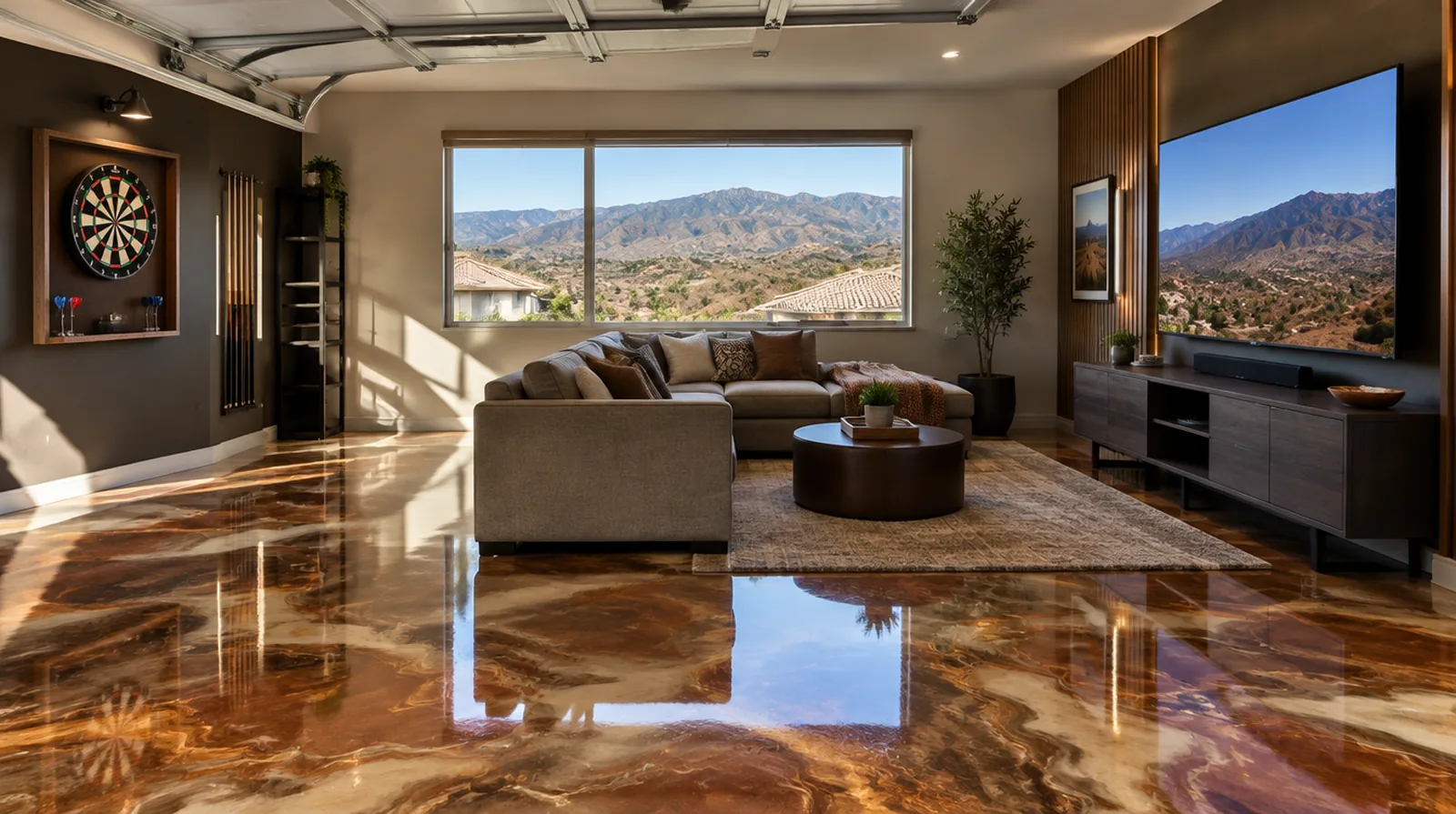
What metallic epoxy is
Metallic epoxy is a clear resin mixed with fine metallic pigments. While it is still wet, we move it around with rollers, brushes, sprayers and solvents to create swirls, ripples and depth. As the resin cures, the pigments settle in place, and the result looks a bit like polished stone, flowing water or the surface of a far-off planet. Every floor is one of a kind.
It is not just pretty. Under the clear topcoat, a metallic floor is a thick, tough epoxy system, and it holds up well in gyms, game rooms and light commercial spaces.
Popular rooms for metallic
- Converted garages and bonus rooms. Many families here turn part of a big garage into a game room or a teen hangout.
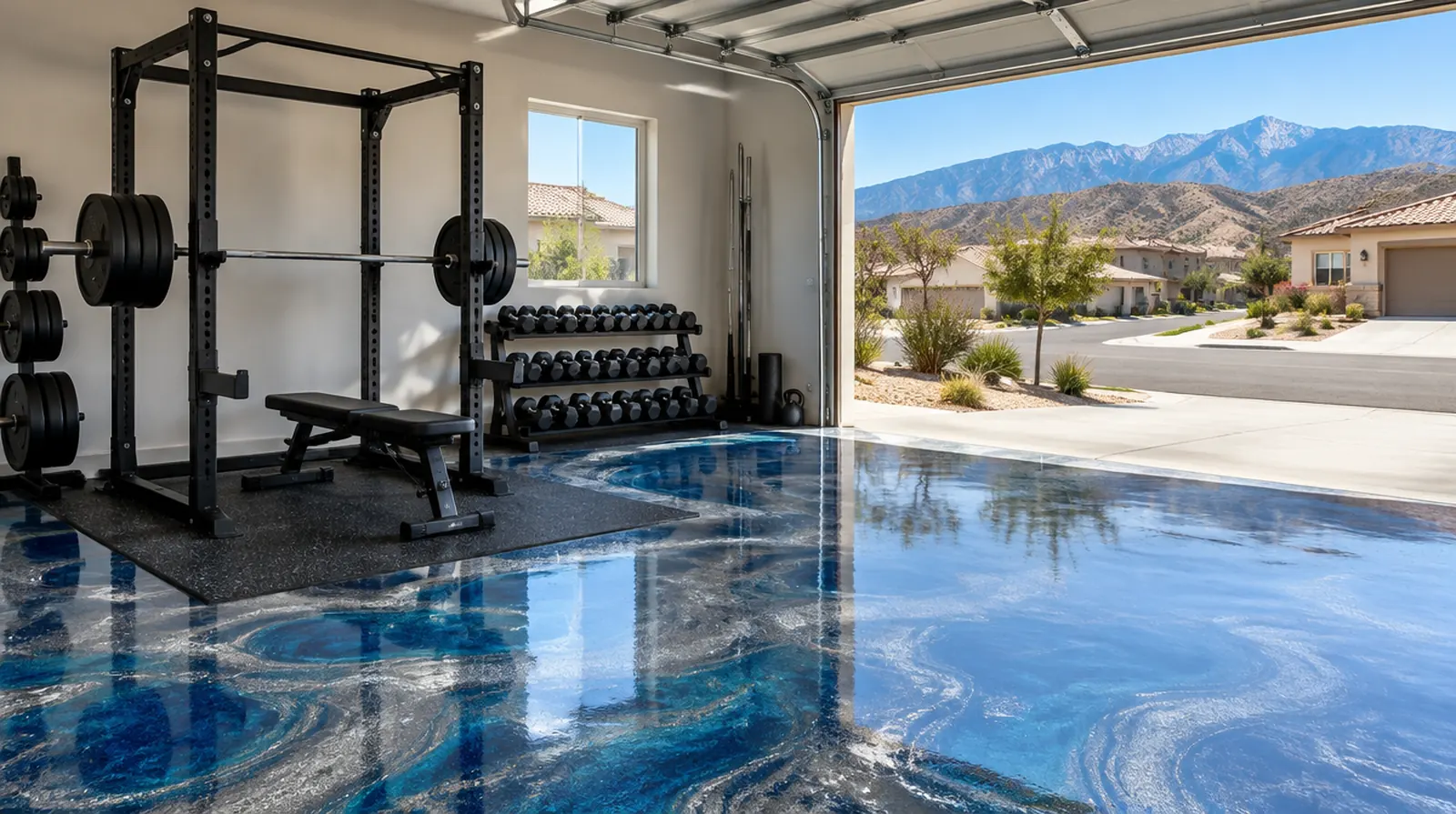
- Home gyms. A metallic floor looks sharp and handles rubber mats and equipment.
- Showrooms and salons. Businesses use metallic floors to make a strong first impression.
- Basements and studios. A great way to finish a concrete floor without tile or wood.
How we pour a metallic floor
- Grind the slab flat and smooth. A metallic floor shows every high and low spot, so prep is extra careful.
- Fill and level cracks, joints and low areas.
- Prime the floor to seal the concrete and stop bubbles.
- Lay a base color that sets the overall tone.
- Pour the metallic coat and work it into the pattern you chose.
- Topcoat with a clear, UV-stable layer for scratch resistance and lasting color.
Choosing colors
We have dozens of pigment colors. Some of the most requested in Beaumont are:
- Bronze, copper and gold tones that warm up a room and pair well with dark wood and leather.
- Silver and charcoal for a sleek, modern look.
- Blue and teal blends that look like water.
- White and pearl for a marble-like effect.
We can show you photos of floors we have done and sample boards, and we talk through the look you want before we start.
Things to know before you choose metallic
Because it is glossy, metallic epoxy shows dust and scratches more than a flake floor. It is best in rooms that do not see constant grit from outside. In a garage that is also used for parking, a flake floor is often the better choice. If the room gets direct sun through a big window, we use a UV-stable topcoat so the colors stay true.
Metallic floors can also be slippery when wet. We can add a fine grit to the topcoat for better footing, especially in gyms and near doors.
How long it takes
Most metallic floors take two to three days of work, with extra time for the coats to cure between steps. You can usually walk on the floor a day after the last coat and move furniture back in after a few days.
Care
Dust mop often, and use a damp mop with a mild cleaner. Put felt pads under chairs and furniture. Use mats at outside doors to catch grit. Avoid dragging heavy equipment across the floor.
Questions
Can you match a certain look?
We can get close to a style or color, but each floor is unique.
Does it work over old tile?
Usually we remove tile and grind the slab first. In some cases we can coat over well-bonded tile after prep.
Is it good for a business?
Yes. For heavy-traffic spaces we may suggest a thicker system, or our commercial epoxy.
Want a floor that is unique but lower key? Ask about polished concrete.
Pairing metallic with the rest of the house
A metallic floor in a converted garage or bonus room should feel like part of the home, not a separate space. We look at your wall colors, trim and furniture before choosing pigments. Warm bronze floors pair well with the beige and tan interiors common in local homes, while silver and charcoal suit gray and white schemes. We can also run a matching metallic finish onto a bar top or countertop so the room ties together.
Plan a metallic floor
Call (951) 502-3925 for a free estimate.