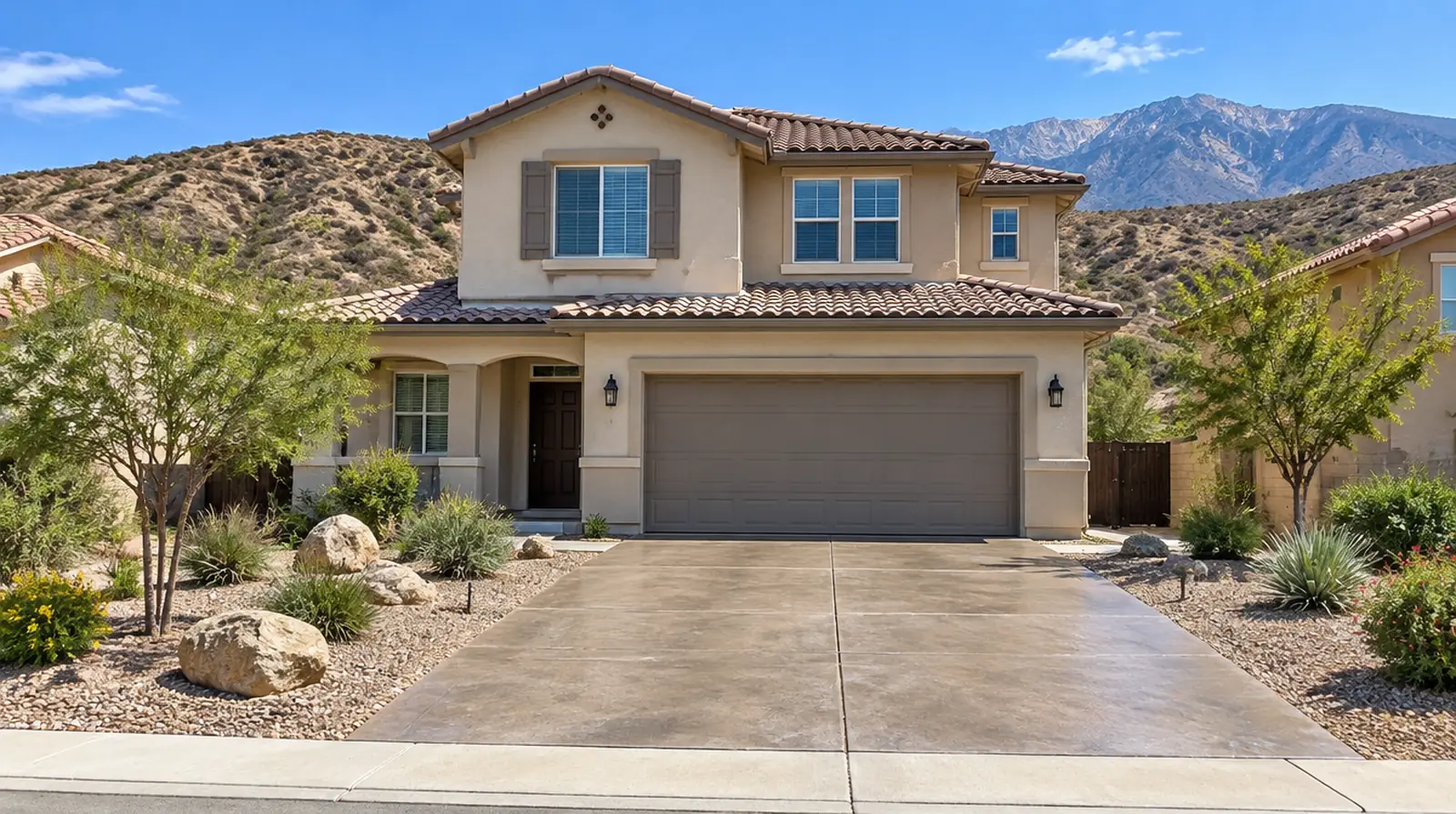
Why driveways look tired
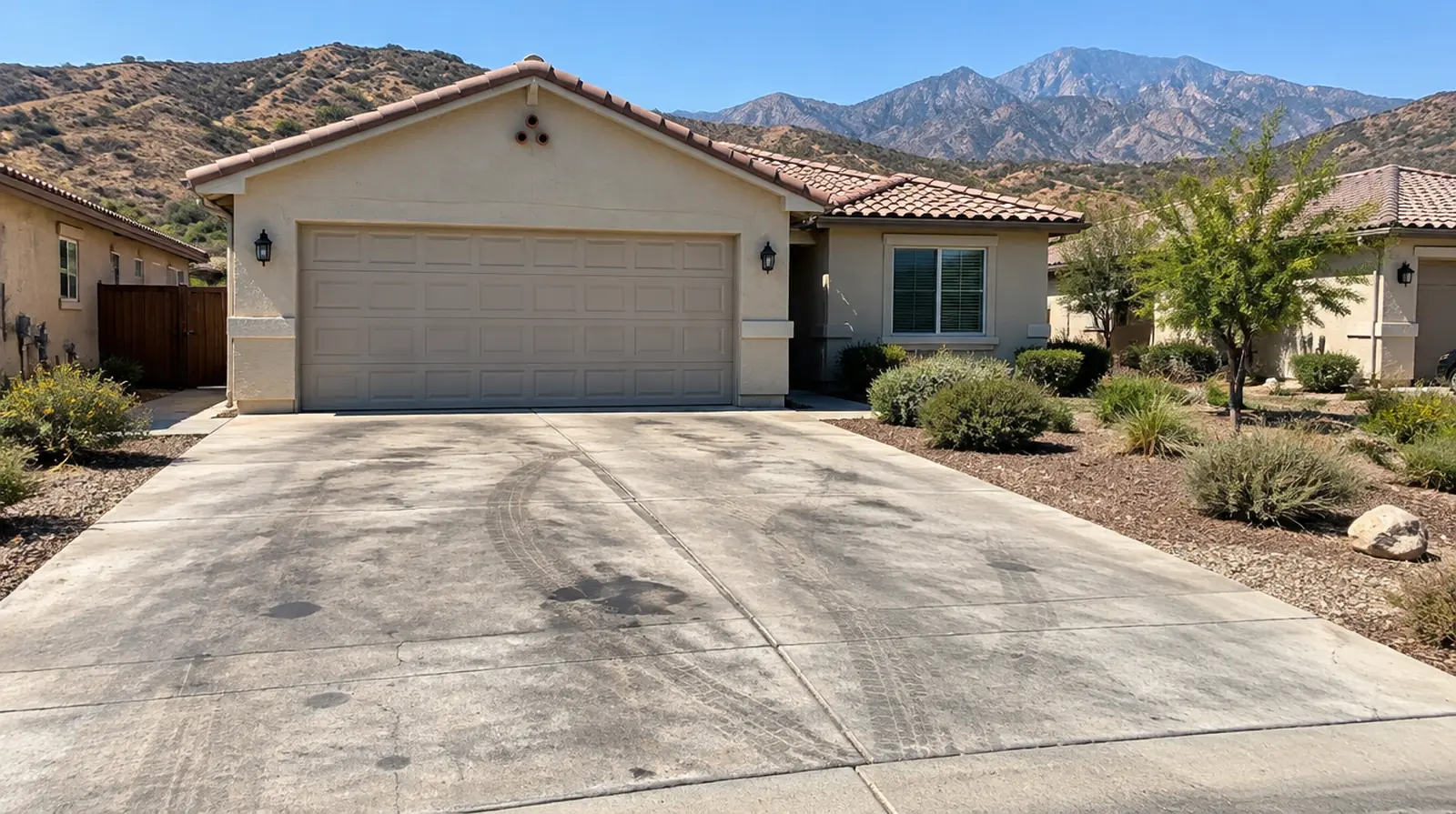
Driveways in Beaumont deal with full sun, wind-blown sand and constant traffic. Oil drips and rust stains from sprinklers soak in. The surface fades and wears, especially where tires turn. Small cracks open up as the slab heats and cools. A driveway that looks worn makes the whole house look older.
Coating options
- Penetrating sealer protects the concrete and keeps its natural look.
- Tinted sealer adds color and evens out stains.
- Polyaspartic coating gives a durable, UV-stable finish with color and texture.
- Flake or quartz coating adds pattern and grip.
We help you pick the right one based on your driveway's condition, your budget and the look you want.
How we coat a driveway
- Pressure wash and degrease.
- Grind or profile the surface so the coating can bond.
- Repair cracks and chips.
- Apply the base coat and color.
- Broadcast flake or quartz if you chose it.
- Topcoat with a UV-stable, slip-resistant finish.
Slip resistance
Driveways can be wet from rain, sprinklers or car washing. We always add texture to driveway coatings so they are safe to walk on. Sloped driveways get more grit than flat ones.
Colors that fit
Most homes here are stucco in tan, beige or gray with tile roofs. Earth tones and soft grays look natural and hide dust. We bring samples so you can see them against your home.
Handling heat
A dark driveway can get very hot in the summer. We usually recommend lighter colors that stay cooler and show less fading. Our coatings are chosen to handle high surface temperatures without softening.
Cracks
We fill cracks before coating. Cracks that move with the ground may show again over time, but filling them keeps water and weeds out.
Questions
How long before I can drive on it?
Usually one to three days, depending on the system.
Will a coating fix a sunken driveway?
No. Coatings protect the surface. Sunken or broken slabs need concrete work first.
How long does a driveway coating last?
With good prep and care, many years. Sealers need refreshing more often.
Want to protect your patio too? See concrete sealing.
What sun and grit do to a bare drive
At this elevation the sun is intense for most of the year, and a bare concrete driveway takes it straight on. Over time the cement paste at the surface breaks down and the fine sand underneath starts to show. Then the wind does its part. Every gust that sweeps across the street drops a little grit on the drive, and every car that rolls over it grinds that grit into the weakened surface. Add sprinkler overspray, which leaves orange rust rings and white mineral crust along the edges, and you get the patchy, tired look we see on so many drives around town.
A coating or sealer interrupts that cycle. It locks the surface together, keeps water and minerals from soaking in, and gives tires and grit something tougher than raw concrete to wear against. Cleaning goes from scrubbing to a quick rinse with the hose.
Planning the job around your household
Most driveway projects take one to three days, and you will need somewhere else to park while the coating cures. We help you plan for that ahead of time. In neighborhoods with tight street parking or HOA rules about where cars can sit, we can split a wide drive into two halves so one side stays usable. We also keep sprinklers in mind. Before we start, we ask you to shut off any zones that spray the drive, and we tell you when it is safe to turn them back on.
If your community has an HOA, check whether it limits driveway colors or finishes. Most allow natural grays and tans. We can provide sample chips and product sheets for your board.
Walkways, entries and side yards
While we are there, many homeowners have us coat or seal the front walk, the entry landing and the side-yard path to the trash bins. Coating them at the same time gives the front of the house a matched, finished look, and it costs less than doing them later as a separate visit. For a covered entry, a flake finish can add a nice touch without being too busy.
Price a driveway coating
Call (951) 502-3925 for a free estimate.